
App-only / Note
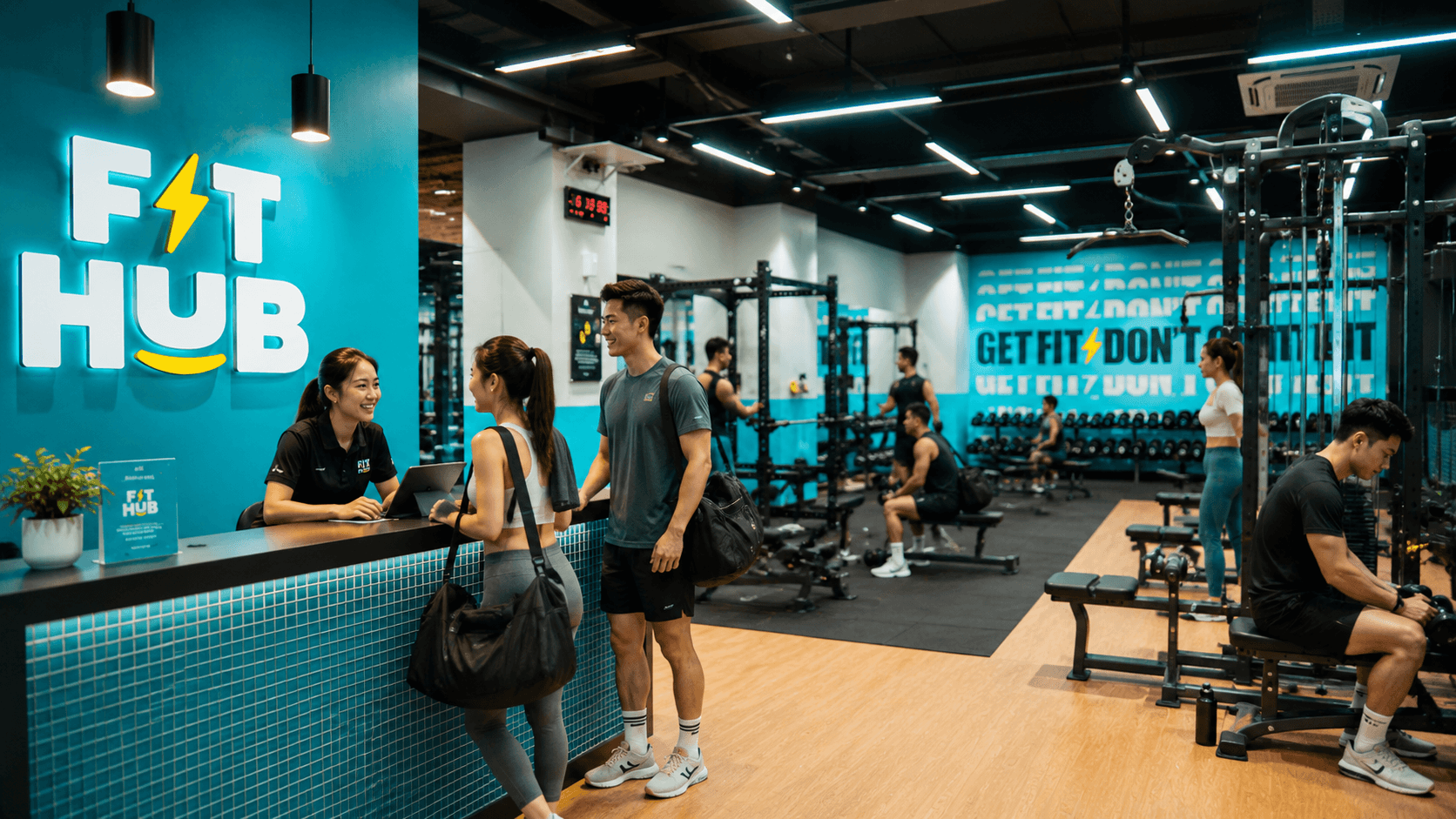
FIT HUB started in 2020 with a relatively simple ambition: Make premium fitness more accessible. Today, the company says it has 400,000+ active members, 120+ clubs across 30+ Indonesian cities, 800+ trainers and 50+ fitness classes. Membership currently starts from around Rp211,000 per month, with access across 120+ clubs. What makes FIT HUB interesting to us is not simply that fitness is growing. It is what the company can teach other physical consumer operators about accessibility, density, standardisation and recurring revenue.
Neverlater
August 20, 2026
Shape your Neverlater
Follow the topics behind this signal
Following immediately improves For You, Daily Brief, and Notifications.
App-only note
FIT HUB’s original positioning was not:
build the most exclusive gym.
It was almost the opposite.
Take a historically premium service and make it accessible to a much larger group.
In 2023, FIT HUB had around 60 clubs and more than 50,000 paying members. Roughly half were reported to be first-time gym-goers.
That is important.
The business was not simply taking customers from other gyms.
It was helping expand the category.
make something previously expensive, inconvenient or intimidating accessible enough for more people to participate.
That lesson travels far beyond fitness.
FIT HUB now markets access across 120+ clubs in more than 30 cities.
That changes the product.
A gym membership with one location is a facility.
A membership with a dense network becomes infrastructure.
Every additional useful location potentially increases the value of the same membership.
This is where physical density can behave a little like a network effect.
The network itself improves the customer proposition.
Opening one beautiful gym is difficult.
Opening more than 100 and keeping them consistently good is a very different operating challenge.
At this scale, consumers experience the brand through thousands of small operational details:
The larger FIT HUB becomes, the less the brand is defined by its marketing.
The operation becomes the brand.
This is one of the most important lessons for any physical consumer business.
FIT HUB’s growth is visible through club openings and membership scale.
But recurring-revenue businesses should ultimately be evaluated through a different lens.
How long does the customer stay?
Acquiring a new member creates the first month of revenue.
Retention determines the economics of the next 12, 18 or 24 months.
FIT HUB’s privacy policy itself shows that the business tracks areas such as membership history, fitness activity, preferences and visit frequency.
The physical gym may be the product consumers see.
The behaviour data can help make that product better.
FIT HUB consistently positions itself as premium and affordable, rather than as a discount gym.
That distinction matters.
Its membership page currently advertises pricing from around Rp211,000 per month while including access across 120+ clubs.
accept less because you pay less.
get more of the experience that matters, at a price accessible to a much wider market.
That is a very powerful consumer position when executed well.
FIT HUB also actively promotes a club-partnership model for expansion.
This is strategically interesting.
Physical fitness is capital intensive.
A partnership model can potentially reduce the capital required for network expansion.
control.
The faster the network grows through partners, the more important operating standards, audits, incentives and local execution become.
Capital-light growth only works if quality does not become light as well.
Our view: FIT HUB’s biggest lesson is not how to build a gym chain.
It is how to take a historically premium service, simplify the proposition, make it accessible, and then use density to make the membership increasingly useful.
But once you reach 100+ physical locations, the competitive advantage shifts.
The early advantage may be pricing and accessibility.
operations.
Because at that scale, the difficult part is no longer opening clubs.
It is making every club feel consistently worth returning to.
How long does the average FIT HUB member stay, and how does retention change as the network matures?
Can the business increase member density without creating overcrowding at peak hours?
As stores mature, do membership revenue, personal training and other monetisation layers improve per location?
Can FIT HUB accelerate through partner-funded clubs without weakening service standards?
Does the value proposition work equally well beyond Indonesia’s largest urban markets?
Can FIT HUB continue expanding the overall fitness category rather than mainly competing for existing gym members?
Can the app, workout tracking, classes and behaviour data deepen retention enough to become meaningful parts of the moat?
References
Sources used to support this Neverlater read.
Discussion
No approved comments yet. Be the first to add a thoughtful note.