
App-only / Note
Global brands may bring the product, reputation and playbook. Someone still has to make the business work locally. In Indonesia, companies such as MAP and Kanmo have quietly built the infrastructure behind hundreds of global-brand stores. The brand above the door matters. But so does the operator behind it.
Neverlater
September 15, 2026
Shape your Neverlater
Follow the topics behind this signal
Following immediately improves For You, Daily Brief, and Notifications.
App-only note
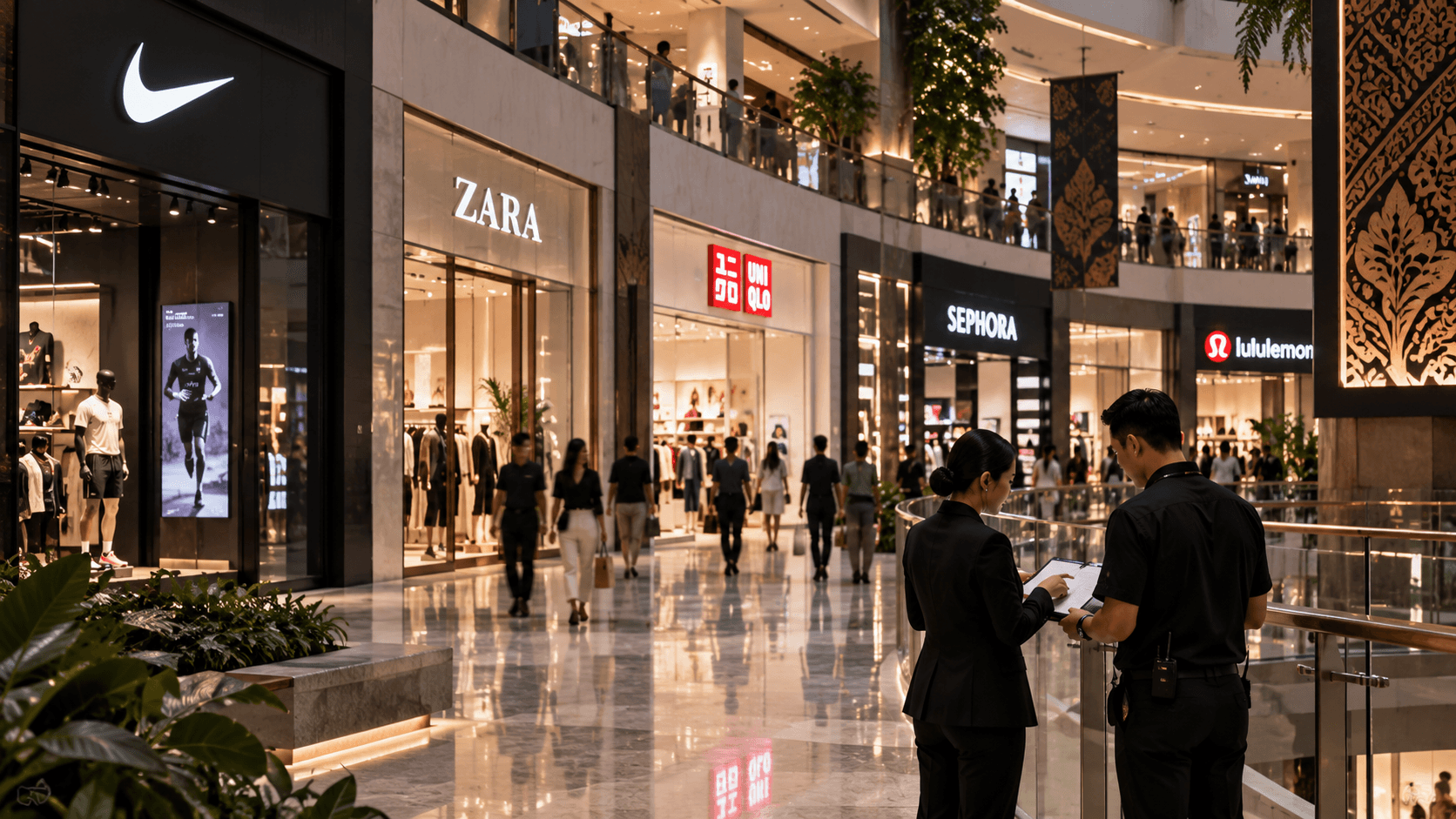
Walk through one of Indonesia’s major malls and you will see some of the largest consumer brands in the world.
Zara.
Sephora.
Starbucks.
HOKA.
New Balance.
Coach.
Adidas.
Consumers see the brand.
But underneath many of those storefronts sits another business that receives much less attention.
The local operator.
MAP, for example, manages more than 150 global brands and 4,200 stores across more than 80 Indonesian cities.
Kanmo manages more than 50 global brands across over 300 stores.
That is not just franchise administration.
It is consumer infrastructure.
proven products,
store design,
brand guidelines,
global campaigns,
consumer awareness.
Which mall should we enter first?
Which city comes second?
What store size works?
How much inventory should sit there?
Which SKUs fit local demand?
How should pricing absorb import costs?
How do we hire and train the team?
What changes during Ramadan?
How should ecommerce connect to the stores?
Indonesia introduces thousands of operational decisions that the global playbook cannot fully answer.
Finding one obvious premium location is not particularly difficult.
Building a network is.
mall productivity,
rent,
catchment quality,
traffic,
tenant mix,
city economics,
and store size.
That knowledge compounds.
Perhaps even more valuable is understanding which locations not to take.
Indonesia cannot be treated as one homogeneous consumer market.
Jakarta behaves differently from Surabaya.
Surabaya differs from Bali.
Two malls within the same city can produce completely different economics.
Experience matters.
The visible part of retail expansion is the opening.
The difficult part begins afterward.
Replenishment.
Allocation.
People.
Training.
Shrinkage.
Maintenance.
Returns.
Merchandising.
Customer service.
Omnichannel.
Weekly performance reviews.
These functions rarely appear in a brand campaign.
Yet they determine whether the global promise actually reaches the consumer.
The customer sees one brand. Underneath it sits an operating system.
This is where large operators become especially interesting.
MAP does not operate one brand.
It operates thousands of stores across fashion, sports, beauty, technology and F&B.
Kanmo similarly spans multiple consumer categories and in 2026 continued expanding its portfolio while becoming a major Adidas franchise partner locally.
That allows capabilities to be reused.
Mall relationships.
Recruitment.
Supply chain.
Technology.
Leadership.
Customer data.
A new global brand does not necessarily enter Indonesia from zero.
It enters an existing operating machine.
local creators,
Ramadan campaigns.
Operational localization is harder.
It means deciding what should remain globally consistent and what needs to adapt.
Pricing.
Assortment.
Store format.
Inventory.
City sequencing.
Promotion.
Payments.
Operating hours.
That judgment may determine whether an international concept becomes locally relevant without losing what made it successful globally.
And this leads to the bigger Neverlater view.
Imagine the exact same global brand being handed to two different Indonesian operators.
Same logo.
Same products.
Same global strategy.
Would both businesses perform identically?
Probably not.
One may choose better sites.
Expand more patiently.
Manage inventory better.
Recruit stronger people.
Operate stores more consistently.
Those differences compound.
The competitive advantage is not always entirely inside the brand.
Sometimes part of the moat belongs to the organization operating it.
Indonesia will continue attracting international consumer brands.
But market opportunity alone does not create successful market entry.
The global brand creates the promise.
The local operator turns that promise into a business.
References
Sources used to support this Neverlater read.
Discussion
No approved comments yet. Be the first to add a thoughtful note.