App-only / Note
Cotti Coffee has proven it can scale quickly. The company says it now operates across 28 countries with more than 14,000 stores globally. But Indonesia tells a different story. Cotti entered the market in August 2023, yet its local footprint still appears relatively limited compared with the speed of its expansion elsewhere. That makes the Indonesia question more interesting than the global one. Cotti has already shown that it knows how to open stores. What Indonesia may be testing is something harder: whether a fast-scaling coffee model can still feel differentiated in a market where affordable, digital-first coffee is already deeply familiar.
Neverlater
August 19, 2026
Shape your Neverlater
Follow the topics behind this signal
Following immediately improves For You, Daily Brief, and Notifications.
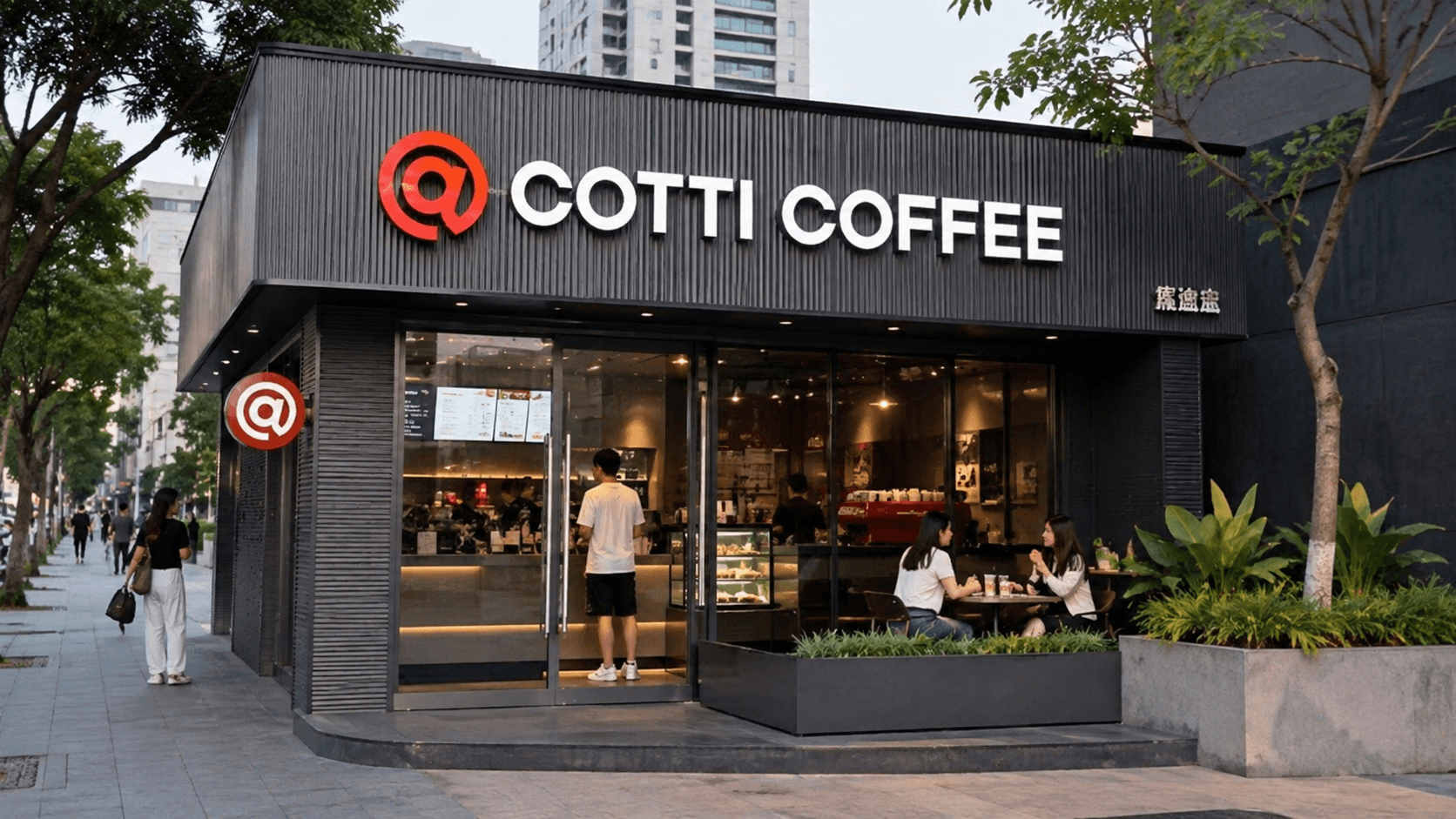
App-only note
Cotti is no longer an early-stage experiment.
Its corporate materials now position the company as a global coffee chain with 14,000+ stores across 28 countries.
That is remarkable scale for a company that only entered Indonesia in 2023.
On paper, the expansion logic should make sense here.
Indonesia is large.
Coffee consumption is mainstream.
Grab-and-go formats are familiar.
Affordability matters.
Digital ordering is already common.
If you only looked at those variables, Indonesia should look like a strong market for Cotti.
But the rollout so far appears much more measured than the company’s global trajectory suggests.
That contrast is what makes the story worth discussing.
This is probably the most important point.
Cotti is not entering an undeveloped coffee market.
That matters because Cotti’s core proposition is not automatically new here.
Affordable coffee is already available.
Milk-based coffee is already familiar.
Small-format coffee stores are everywhere.
Digital ordering is not a novelty.
This means Cotti may be facing a different challenge in Indonesia than in other markets.
The challenge is not whether people like coffee.
It is whether people have a compelling reason to choose Cotti specifically.
A business can be highly scalable without being equally transferable.
That distinction matters.
Opening stores quickly is one capability.
Creating local relevance is another.
Indonesia forces that second question.
In many markets, scale itself can create momentum.
In Indonesia, the market is already crowded enough that scale alone is not the message.
The brand still needs a reason to exist.
Cotti’s global positioning is built on accessibility, convenience, and rollout speed.
But in Indonesia, those advantages may not feel distinctive enough on their own.
What part of the Cotti experience feels meaningfully different?
If the answer is not clear, expansion naturally becomes slower and more selective.
Not because the company cannot grow.
But because growth without differentiation becomes much harder to sustain.
Cotti’s local menu has already shown signs of adaptation, including products such as Aren Macchiato.
That is a useful signal.
But localisation in coffee goes well beyond flavour.
Indonesia’s beverage market is shaped by:
Adding local flavours can help.
It does not automatically solve the broader question of product-market fit.
A business does not win Indonesia only because it translated the menu.
It wins because it understands the daily behaviour around the drink.
We should also be careful not to over-interpret the current footprint.
A slower rollout does not automatically mean underperformance.
It may simply mean Indonesia has not yet become a top priority in Cotti’s broader international expansion sequence.
We do not yet have enough public evidence to state which explanation is correct.
But the contrast itself is still meaningful.
If a company that can scale this quickly is still moving cautiously in Indonesia, that tells us the market is harder than it looks.
Our view: Indonesia is testing whether Cotti’s operating model is merely scalable, or truly differentiated.
Cotti has already proven it can grow.
That is no longer the interesting question.
The interesting question is whether it can build relevance in a market where the core behaviours it depends on are already normal.
Indonesia may therefore become a very useful case study.
Not because it is the biggest coffee market.
But because it forces a cleaner test of competitive advantage.
A scalable format is not automatically a distinctive one.
And in a category as crowded as coffee, distinctiveness matters.
If Cotti can eventually build real frequency and relevance here, that would be a much stronger proof point than simply adding another market to its international map.
Does Cotti materially accelerate openings beyond a handful of Jakarta locations, or does the rollout remain selective?
Who is funding and operating the Indonesian network, and does the structure allow the company to scale with real speed?
Can Cotti create a meaningful value gap versus Fore, Kopi Kenangan, Tomoro, Point Coffee, and other affordable players?
Does the menu evolve around Indonesian tastes and consumption habits, or remain too close to a standard export model?
Do customers come back after trial, or is the brand still relying too heavily on novelty and promotions?
Can Cotti build presence in office areas, neighbourhood clusters, and habitual grab-and-go locations where coffee frequency is stronger?
What ultimately makes Cotti meaningfully different in a market that already understands affordable, digital-first coffee?
References
Sources used to support this Neverlater read.
Cotti Coffee continues international expansion with Indonesia debut
Use for current stated global scale: 28 countries, 14,000+ stores.
Use for current Indonesia opening visibility and local market activity.

Discussion
No approved comments yet. Be the first to add a thoughtful note.