
App-only / Note
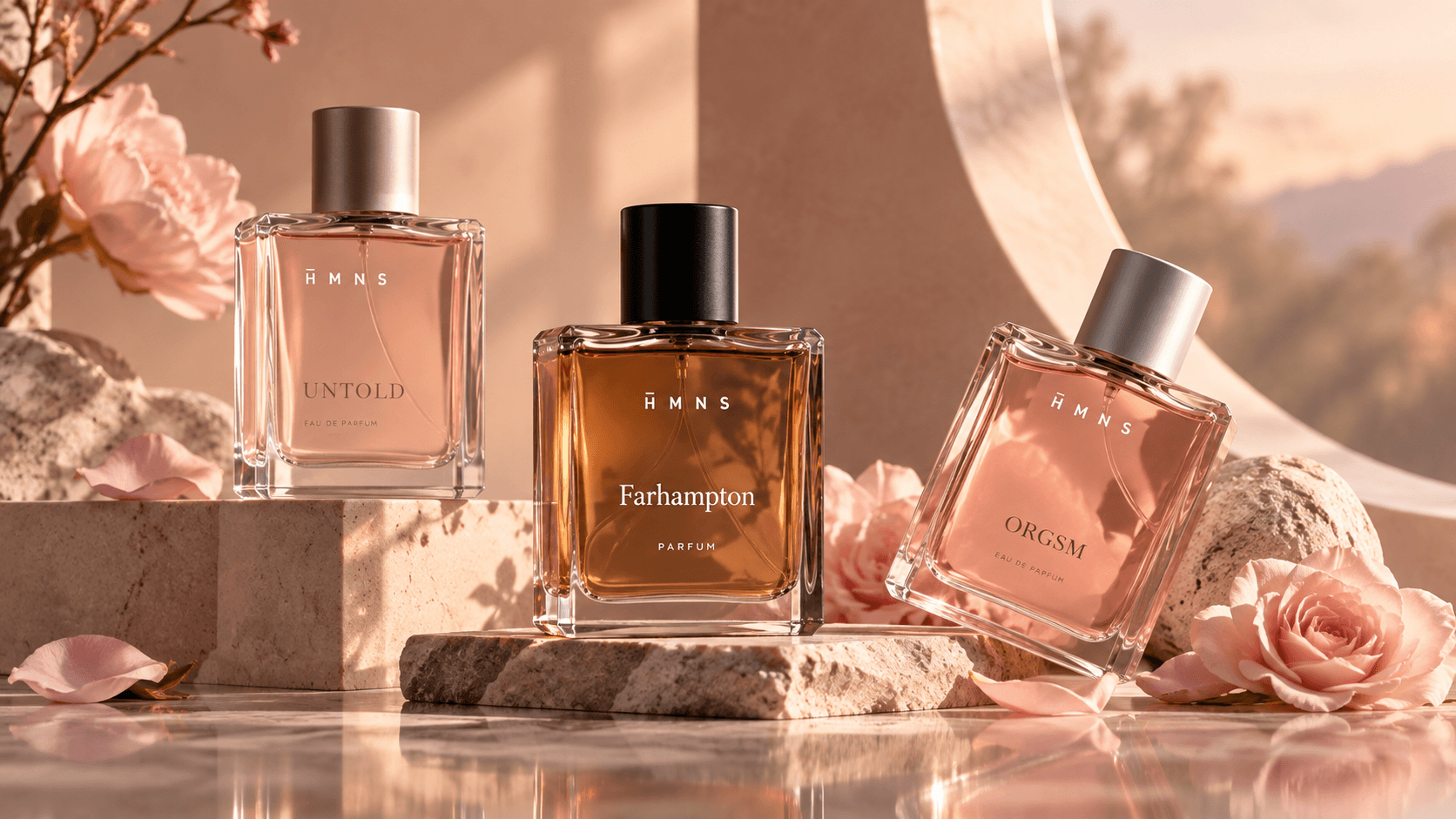
HMNS helped make Indonesian fragrance more visible. But the more interesting signal is that it is not alone. In Q1 2026, eight of the ten leading fragrance brands on Shopee Indonesia were local. The question is no longer simply whether one Indonesian fragrance brand can succeed. It is: Why does fragrance appear to be a category where local brands can compete so effectively?
Neverlater
September 19, 2026
Shape your Neverlater
Follow the topics behind this signal
Following immediately improves For You, Daily Brief, and Notifications.
App-only note
Look at the Shopee Indonesia fragrance rankings and something interesting appears.
MyKonos.
Octarine.
Scarlett.
HMNS.
SAFF & Co.
Macbrame.
Fres & Natural.
Morris.
Eight of the top ten fragrance brands by tracked sales value in Q1 2026 were Indonesian.
MyKonos led the ranking with 5.27% market share, followed by Octarine at 3.90%, Scarlett at 3.87%, HMNS at 3.40% and SAFF & Co. at 2.51%.
One marketplace does not represent the entire Indonesian fragrance industry.
But the consistency is still worth studying.
Because local brands are not simply existing in the category.
They are competing at the front.
At the most functional level, perfume has a simple purpose.
You smell good.
But that is rarely how consumers actually talk about fragrance.
identity,
mood,
memory,
occasion,
personality.
That gives brands enormous creative room.
One bottle can represent clean.
Another dark.
Another romantic.
Another work.
Another holiday.
Another nostalgia.
The functional job is simple. The emotional territory is enormous.
That is useful for younger local brands that cannot compete with European luxury houses on decades of heritage.
They can compete on contemporary relevance.
There is an obvious limitation.
You cannot smell your phone.
Yet fragrance content works remarkably well.
Creators describe scents.
Compare them.
Rank them.
Talk about projection.
Longevity.
Occasions.
What a scent reminds them of.
This turns creators into translators.
The consumer cannot experience the core sensory attribute digitally, so they rely partly on someone else to interpret it.
That creates strong conditions for creator-led discovery.
Global luxury fragrance can require a significant wallet.
Local brands can occupy a middle ground.
More considered than mass-market body spray.
More aspirational packaging and storytelling.
But still substantially more accessible than luxury perfume.
affordable premium.
We have seen similar behavior in coffee, beauty and lifestyle categories.
Consumers may not want the cheapest product.
They want something that feels elevated while remaining realistically accessible.
Fragrance also behaves differently from many replenishment categories.
A consumer may need one active moisturizer.
They can reasonably own five fragrances.
Work.
Weekend.
Date night.
Fresh.
Sweet.
Travel.
Different scents satisfy different identities and occasions.
That means one customer does not necessarily equal one active SKU.
The category can expand through collection, not only replenishment.
This may be the most interesting part.
The Q1 2026 leader had only 5.27% share in the Shopee data.
HMNS held 3.40%.
SAFF & Co. 2.51%.
That suggests a fragmented category rather than one dominant player.
Good for opportunity.
Harder for defensibility.
The next successful launch can move the rankings.
So can the next creator trend.
Attention has clearly been won by local brands.
Durable preference is a different challenge.
This brings us back to fragrance’s biggest digital limitation.
You cannot smell a screen.
Physical distribution solves that immediately.
Stores.
Counters.
Pop-ups.
Testers.
Sampling.
Offline therefore does more than add another sales channel.
It removes the fundamental friction around product discovery.
This may become increasingly important as local fragrance brands mature beyond marketplace-first growth.
The interesting question for HMNS, MyKonos, SAFF & Co. and others is no longer whether consumers will try Indonesian fragrance.
They clearly will.
The next questions are harder.
Can they create hero products that survive launch cycles?
Can they build offline distribution?
Can they generate genuine repeat?
Can they protect margins as competition increases?
Can one of them travel beyond Indonesia?
That last question may ultimately be the most interesting.
Indonesia has created many successful local consumer brands.
Far fewer have become genuinely regional.
Fragrance might be one of the categories capable of changing that.
The products are compact.
Storytelling travels.
Creator discovery travels.
Margins can potentially support distribution.
But local success is not regional product-market fit.
The brands have proved they can win attention at home.
The next race is to see who can turn that attention into durable brand preference, and eventually into relevance beyond Indonesia.
References
Sources used to support this Neverlater read.
Discussion
No approved comments yet. Be the first to add a thoughtful note.